
SCREENING MATCH: March 2025
On Atom Egoyan's SEVEN VEILS, Jacques Rivette, the "Rochelle Rochelle" Episode of Seinfeld, Bleak Movies, and more...

Reader, after two months of seeing a lot of godawful films in the theaters, it is with immense joy I share that March 2025 was a great month for moviegoing. Some of these films are imperfect, flawed, some outright bad in parts. None were disinteresting though, which is the cardinal sin of filmmaking. Without further ado…
IN THEATERS:
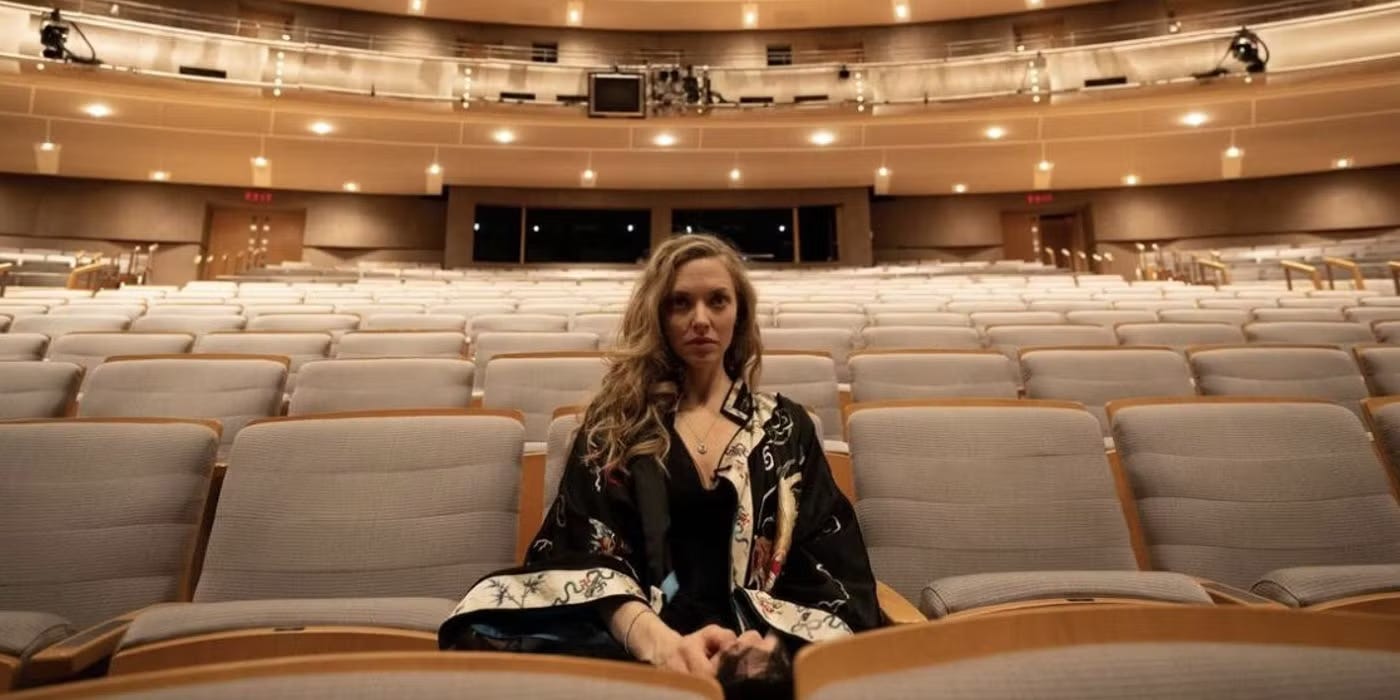
SEVEN VEILS:
If you can believe it, Atom Egoyan is back! Despite a prolific run of psychologically intense, indelible dramas throughout the ‘90s, Egoyan has since been relegated to the dregs of the industry; one is more likely to be familiar with Egoyan’s 2009 bozo-mode erotic thriller Chloe than Exotica or The Sweet Hereafter. A seeming unending string of box-office flops and critically panned works throughout the 2010s have threatened to keep Egoyan there, locked behind the iron bars of “director jail.”
But his newest film, Seven Veils, might just be the spark needed to kick off the long-awaited Egoyaissance. Reteaming with Amanda Seyfried more than a decade after starring in Chloe, Seven Veils follows Jeanine, a theatre director tasked with remounting her mentor’s production of the opera Salome after his death. In the process however, memories of abuse from her mentor and family come back to light, memories that force Jeanine to re-examine her past and threaten to unravel her.
Like his ‘90s films, Seven Veils finds Egoyan weaving several storylines of abuse, alienation, grief, and technological isolation into a jigsaw puzzle of a film laid out to the audience one piece at a time. What makes these pieces particularly of note this time is the mishmashed tapestry of digital imagery Egoyan employs to build each one out — the disquieting, lecherous gaze of lo-fi SD video, the clandestine zoom-ins and peeks around the corner from an iPhone camera, the constricting, coffin-like shape of a TikTok vertical video.
In one of the film’s recurring images, Seyfried frequently appears in reflection while FaceTiming on her iPad. Her face is disembodied, floating over images of family members and her children. It is a simple, yet ingenious choice, Seyfried physically and psychologically alienated from her own life, one that has stuck with me for weeks after seeing.
While Seven Veils may have been unceremoniously dumped into theaters, it is a truly exciting return to form for Egoyan. With Amanda Seyfried delivering perhaps her best performance in a Tár meets Opening Night fashion, and a bracingly modern cinematic style, I pray this is the start of a new, reinvigorated era for Egoyan.
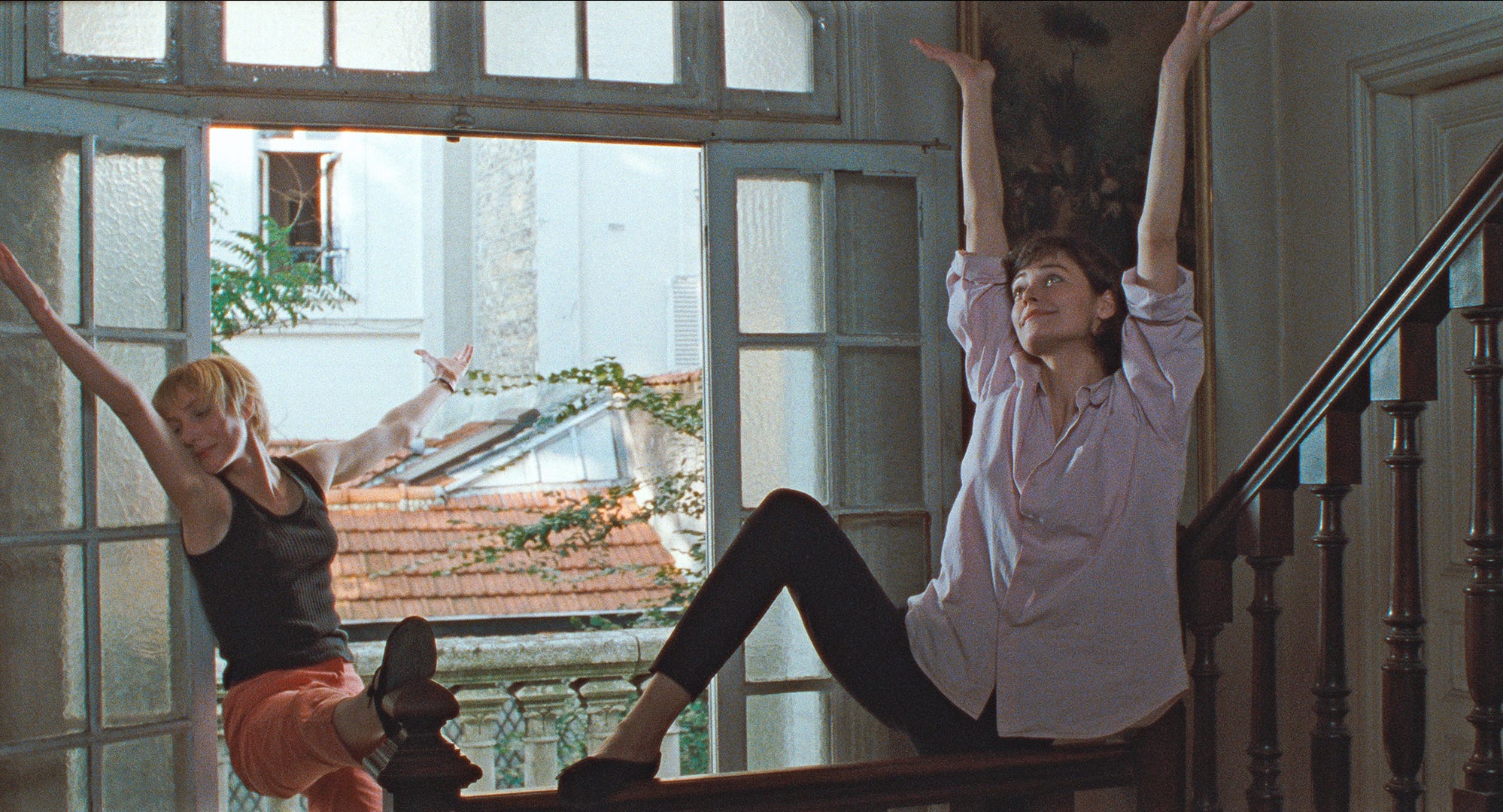
UP, DOWN, FRAGILE:
I find myself often intimidated by the prospect of watching a Rivette film. Given his predilection for immense runtimes, loosely put-together narratives, and heavy experimentation, Rivette is undoubtedly a demanding, challenging filmmaker to encounter.
However I am also reminded that Rivette too is an incredibly inventive and playful filmmaker, less concerned with telling audiences a story, but rather, the joyous feeling of having a story materialize before you. The feeling one gets playing both detective and author, trawling your imagination, connecting events in your life together, inventing narratives and drawing schemes. Creating a story instead of merely telling one is the basis of Rivette.
As such, Up, Down, Fragile is one of those miracles of free-form artistic creation that Rivette is able to conjure with his films. A musical (Rivette’s only!) about three women’s adventures across a Parisian summer, Up, Down, Fragile relishes in the pure excitement of the present. At once, conspiracies can arise, or an empty soundstage can turn into the setting of a glorious, MGM-style musical sequence. Unencumbered by traditional plotting, the present moment takes center stage in Rivette’s cinema, a present that seems to offer unlimited possibilities.
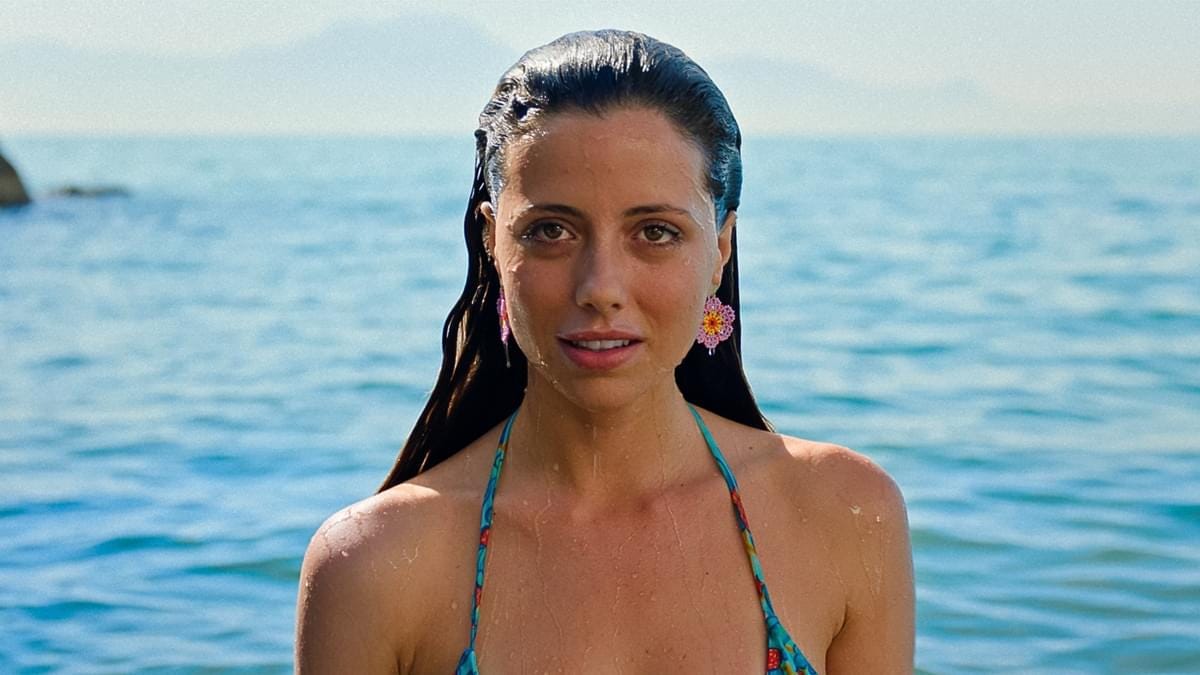
PARTHENOPE:
One of my favorite Seinfeld episodes is S4E14, “The Movie.” In it, Jerry, George, Elaine, and Kramer make plans to catch a movie one night. Naturally, hijinks ensue. Throughout the episode, George keeps trying to steer the group towards seeing Rochelle, Rochelle - a sexy international art film billed as “A young girl’s strange, erotic journey from Milan to Minsk.”
2025 has its own Rochelle, Rochelle with Paolo Sorrentino’s latest picture Parthenope. Born in 1950s Naples, our heroine Parthenope spends decades seeking love, fulfillment, and the answer to the unexplainable questions of existence. There’s only one small problem — she just can’t help being so goddamn pretty!
Across the film’s runtime, Parthenope is forced to bear the burdensome cross of body tea and a bomb ass face card as she seeks for something greater than herself. A journey that leads her into drama, intrigue, anthropology, incest, helicopters, mob-sanctioned copulation rituals, gay guys, and sex with a cardinal. You may be asking, is this a real movie? YES IT IS!
This is not to say there aren’t redeeming elements of Parthenope. Celeste Dalla Porta makes the most out of her terribly written role, lending an air of grace to what would otherwise be a misogynistic caricature of womanhood. Sorrentino, despite his horribly misguided screenplay, does still provide all the splendor and richly directed style he is known for. It is a shame that for all his directorial imagination, he simply cannot imagine his female protagonist having a thought.
Yet despite these criticisms, I still find myself thinking about Parthenope. In brief flashes, the film contains a genuine romanticism that is all too rare in the hermetic, sterile cinema of today. It is a film of sincere convictions about love, living, and self-discovery, despite how juvenile those convictions are. The tens of us who have seen the film would agree, there’s something about Parthenope that is not so easily forgettable.
OTHER THOUGHTS:
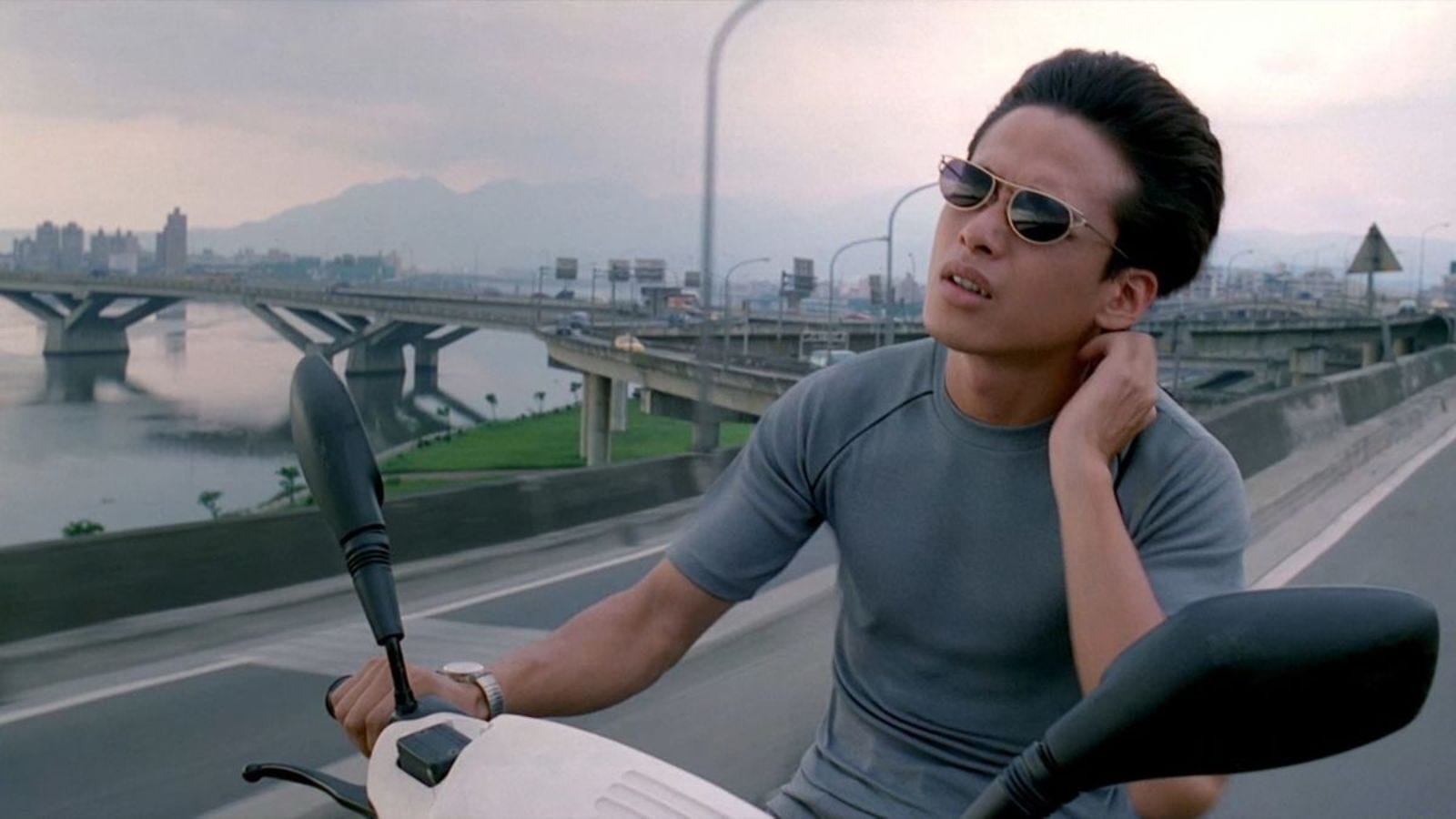
The River: The most harrowing and bleak vision of social alienation I’ve seen from Tsai Ming-Liang. Lee Kang-Sheng’s physicality and control over movement as an actor is fully on display here, and is marvelous to witness. Made me feel absolutely horrible the rest of the day, in a good way.
AT HOME:
STEALING BEAUTY:
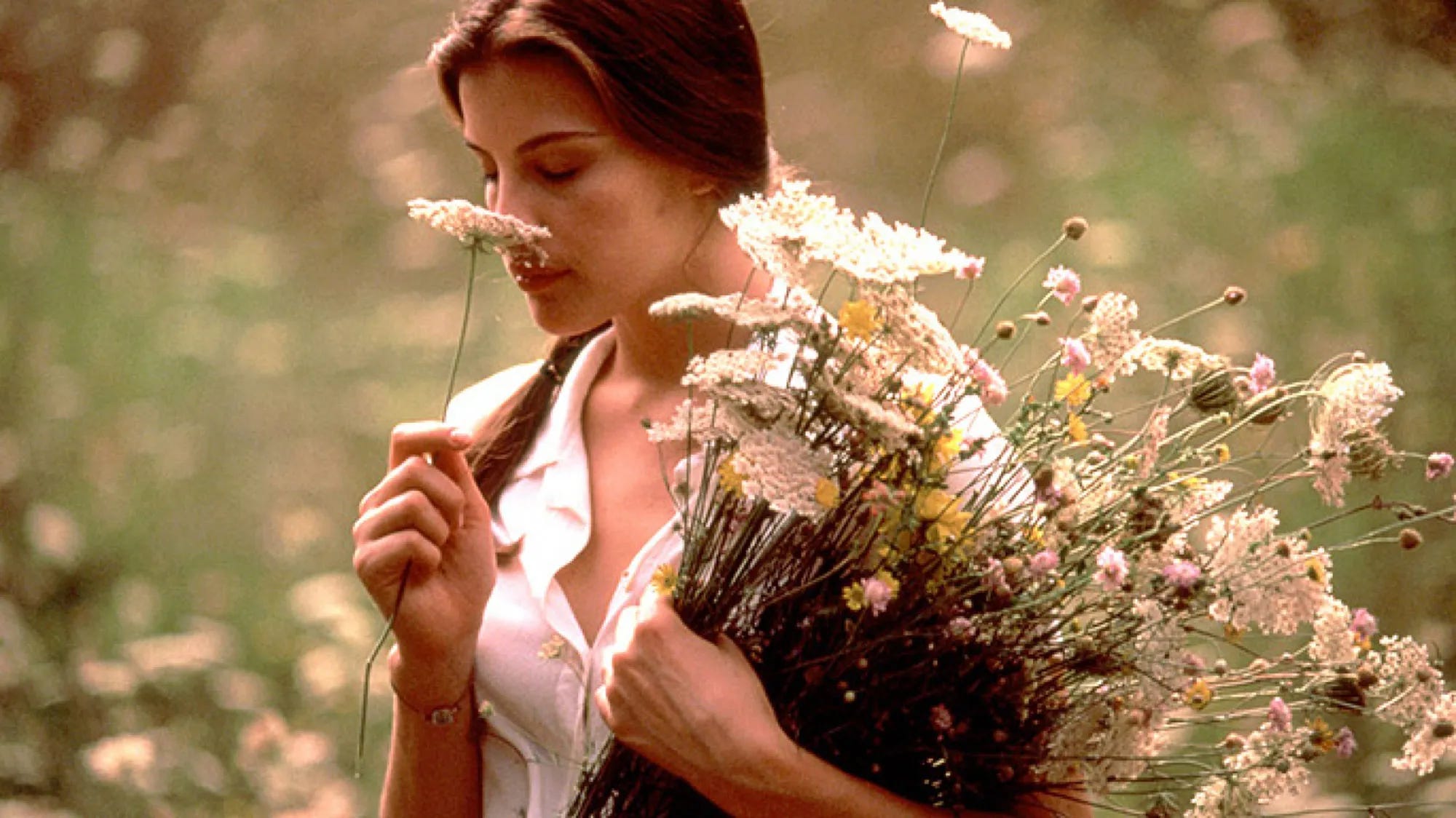
My friend Sam, who did not care for Parthenope, insisted I instead watch Bertolucci’s 1996 coming-of-age drama that plays upon similar themes following Liv Tyler as she spends a summer writing poetry, looking for love, and discovering herself at a Tuscan villa following the death of her mother.
In comparison to Parthenope, Lucy Harmon feels as lived-in, honest, and real of a character as Mabel Longhetti. It’s not incorrect to call this the type of film Luca Guadagnino has built his whole career off of - concerning young love, lust, sex, age gaps, and brief, yet life-altering romances. That said, Stealing Beauty combines the worst of Sorrentino’s navel-gazing and Guadagnino’s aimlessness. This is not to say Stealing Beauty is a bad film, but much like how it can be nice to share a summer day by the pool listening to Portishead with Liv Tyler, one can still risk getting burnt after laying out in the sun too long.
FULL METAL JACKET:
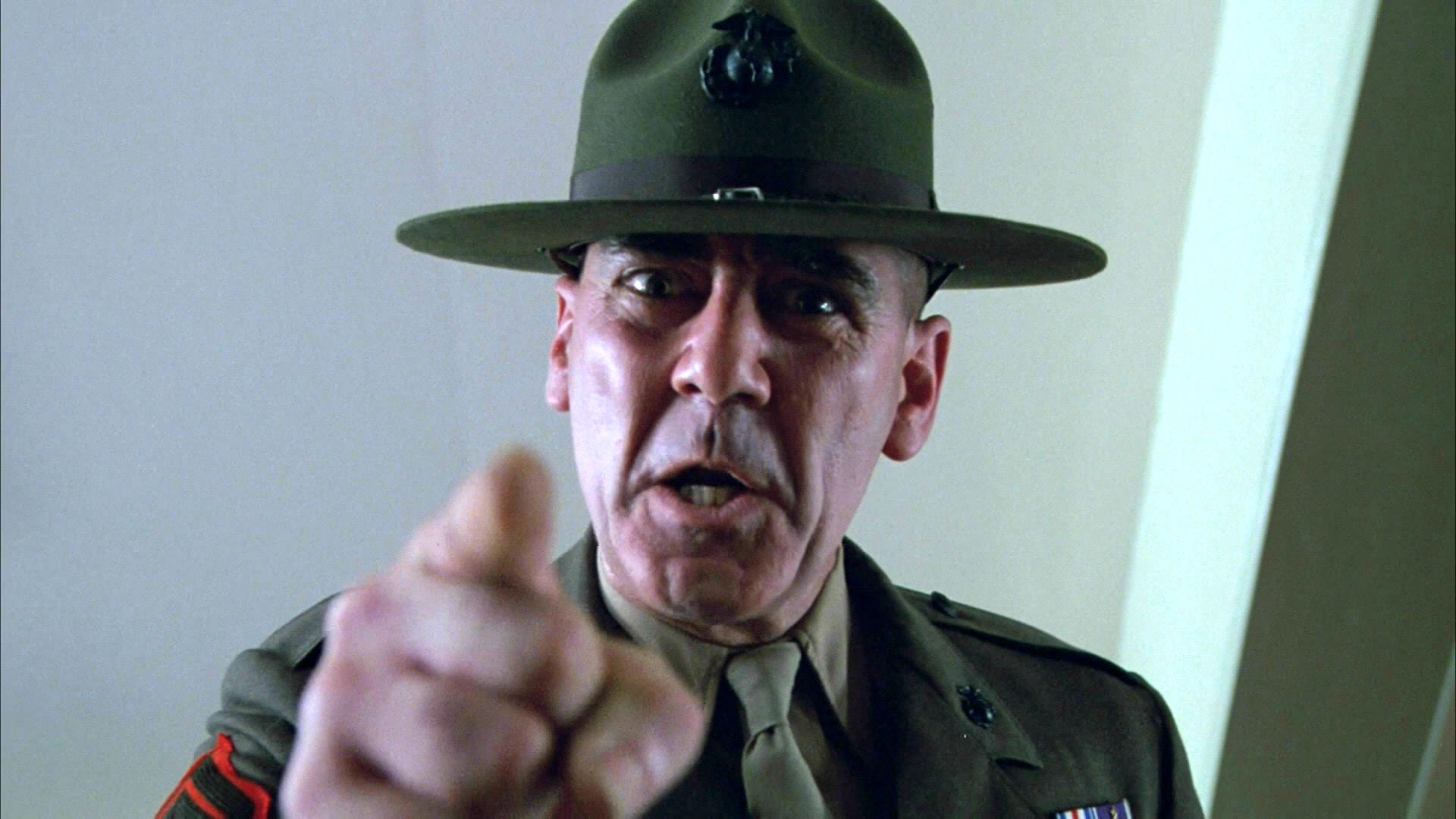
Jesus Christ, another absolutely harrowing and upsetting film I decided to watch right after seeing The River. I need to lay off the bleak stuff for a minute. I understand now why R. Lee Ermey plays a drill instructor in practically every movie since.
BONUS:
Rochelle, Rochelle - A young girl’s strange, erotic journey from Milan to Minsk!